Autoclave Machine

The Core Pressure System Behind Structural & Safety Laminated Glass

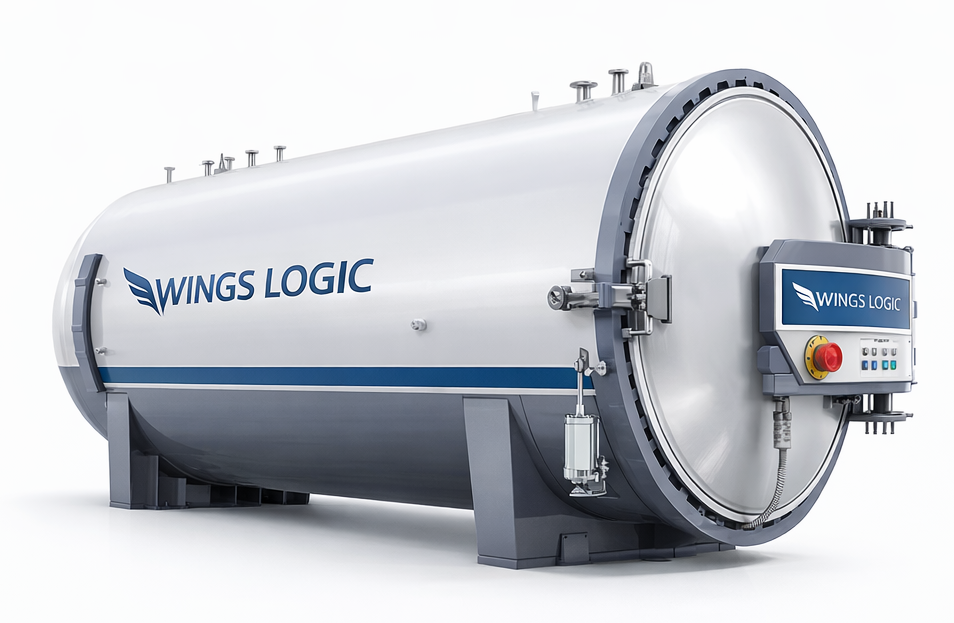
Wings Logic Autoclave Machines are engineered to deliver precise temperature, pressure, and time control required for producing structurally sound, optically clear, and long-lasting laminated glass. The autoclave is not an accessory in lamination—it is the final authority on laminated glass quality, safety, and certification readiness.
Every laminated glass panel, regardless of how perfectly it is assembled upstream, is ultimately judged by autoclave performance. This is where Wings Logic applies heavy engineering discipline, not compromise.

Why the Autoclave Is the Heart of Lamination

The autoclave performs the final chemical–mechanical bonding of glass and interlayer under:
If any of these parameters fluctuate, the result can be:
Wings Logic Autoclave Machines are engineered to eliminate variability, ensuring laminated glass meets architectural, safety, and structural performance standards consistently.

Core Engineering Philosophy

Wings Logic autoclaves are built on three uncompromising principles:
The autoclave is treated as a pressure vessel + thermal system + digital control platform, not just a heated chamber.

Autoclave Structure & Pressure Vessel Design

The autoclave vessel is manufactured using high-grade, thick steel plates, designed to withstand continuous high-pressure operation with a wide safety margin. Engineering highlights include:
  • Cylindrical pressure vessel geometry for uniform stress distribution
  • Precision-welded construction
  • Stress-relieved fabrication for long service life
This ensures structural integrity under repeated pressure cycles over many years.


High-Integrity Door & Locking Mechanism
The autoclave door system is engineered with:
  • Multi-point mechanical locking
  • Pressure-assisted sealing
  • Redundant safety interlocks
The door cannot open unless internal pressure is fully released, ensuring absolute operator safety.
Uniform Pressure Application
The autoclave applies pressure evenly across all laminated glass panels inside the chamber, ensuring:
  • Complete interlayer bonding
  • Elimination of trapped air
  • Consistent optical clarity
Pressure uniformity is critical for large laminated panels, where uneven force can cause distortion or bonding inconsistency.


Industrial-Grade Pressure Control
Advanced pressure control valves and sensors maintain:
  • Stable pressure levels
  • Controlled pressure ramp-up and ramp-down
  • Safe emergency pressure release
This ensures process stability and equipment safety under all operating conditions.

Precision Heating System
The heating system is designed to deliver:
  • Uniform temperature throughout the chamber
  • Controlled heating rates
  • Stable soak temperature
Uniform heating prevents:
  • Optical distortion
  • Uneven interlayer flow
  • Thermal stress in glass
 
Advanced Air Circulation
High-capacity circulation fans ensure:
  • Even heat distribution
  • Elimination of hot and cold zones
  • Consistent lamination results across the load
This is especially important for mixed glass sizes and thicknesses processed in a single cycle.
Programmable Control System
Wings Logic autoclaves feature advanced PLC-based control systems that allow:
  • Custom cycle programming
  • Multi-stage heating and pressure profiles
  • Storage of recipes for different laminated glass types
This ensures repeatability, which is essential for certification-driven production.


Process Monitoring & Data Logging
Critical parameters such as:
  • Temperature
  • Pressure
  • Time
are continuously monitored and logged. This provides:
  • Quality traceability
  • Process verification
  • Audit readiness

Wings Logic Autoclaves are suitable for processing:

  • PVB laminated glass
  • Multi-layer laminated configurations
  • Specialty safety interlayers (with configuration support)

The system can be tuned to match interlayer-specific processing requirements, ensuring optimal bonding performance.

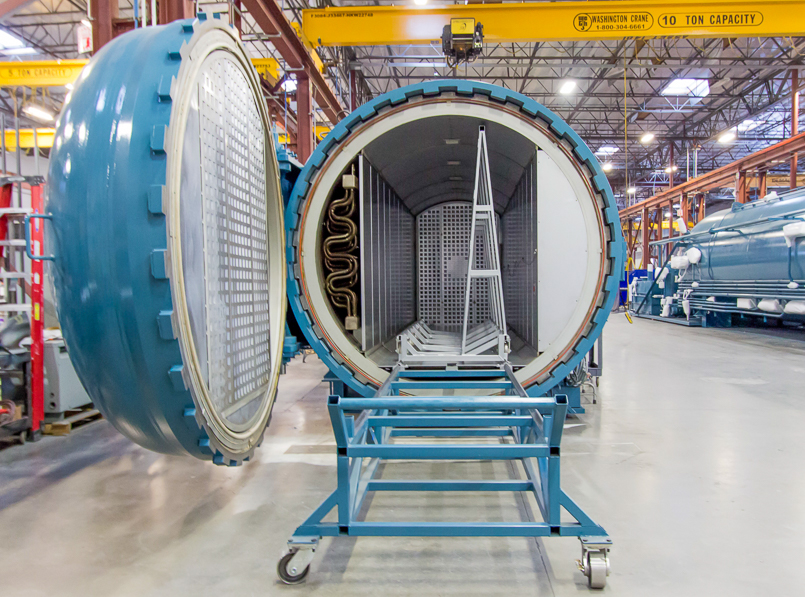
Trolley & Rack Systems
Autoclaves are equipped with:
  • Heavy-duty loading trolleys
  • Stable rack systems for vertical or horizontal glass placement
This ensures:
  • Safe loading and unloading
  • Maximum chamber utilization
  • Stable panel positioning during processing


Large Panel & High-Load Capability
Designed to handle:
  • Jumbo laminated glass panels
  • High batch weights
  • Continuous production cycles
This makes the system suitable for architectural and façade glass factories.
Multi-Layer Safety Engineering
Wings Logic autoclaves include:
  • Overpressure protection systems
  • Emergency pressure release valves
  • Temperature limit safeguards
  • Door interlock logic
Safety is engineered at mechanical, electrical, and software levels.


Compliance & Certification Readiness
The autoclave design supports compliance with:
  • Industrial pressure vessel standards
  • Safety regulations
  • Laminated glass production requirements
This is essential for customers supplying regulated markets and export projects.
Performance Under Industrial Conditions
Wings Logic Autoclaves are designed for:
Industrial-grade components ensure stable performance and minimal downtime, even under demanding production schedules.
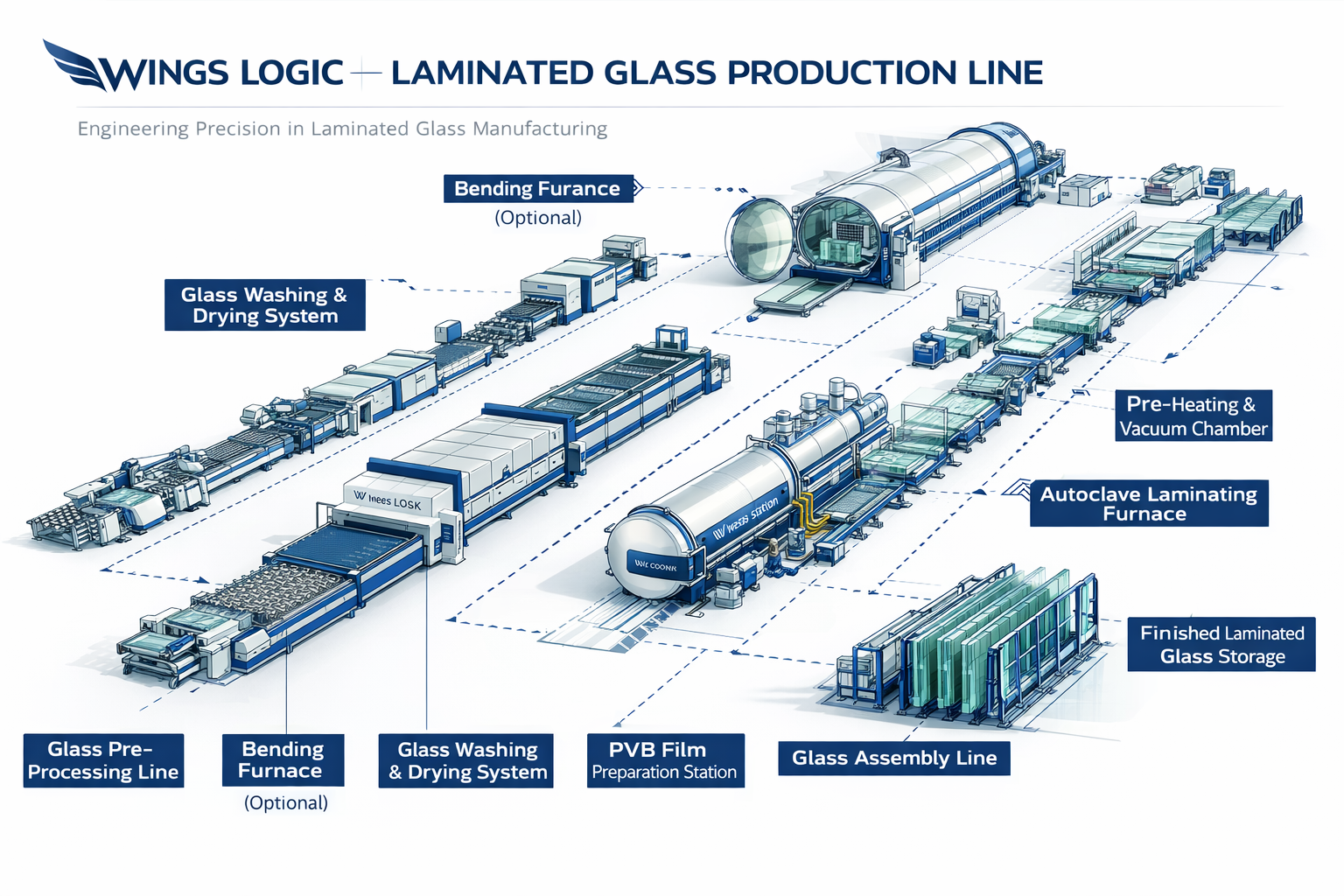
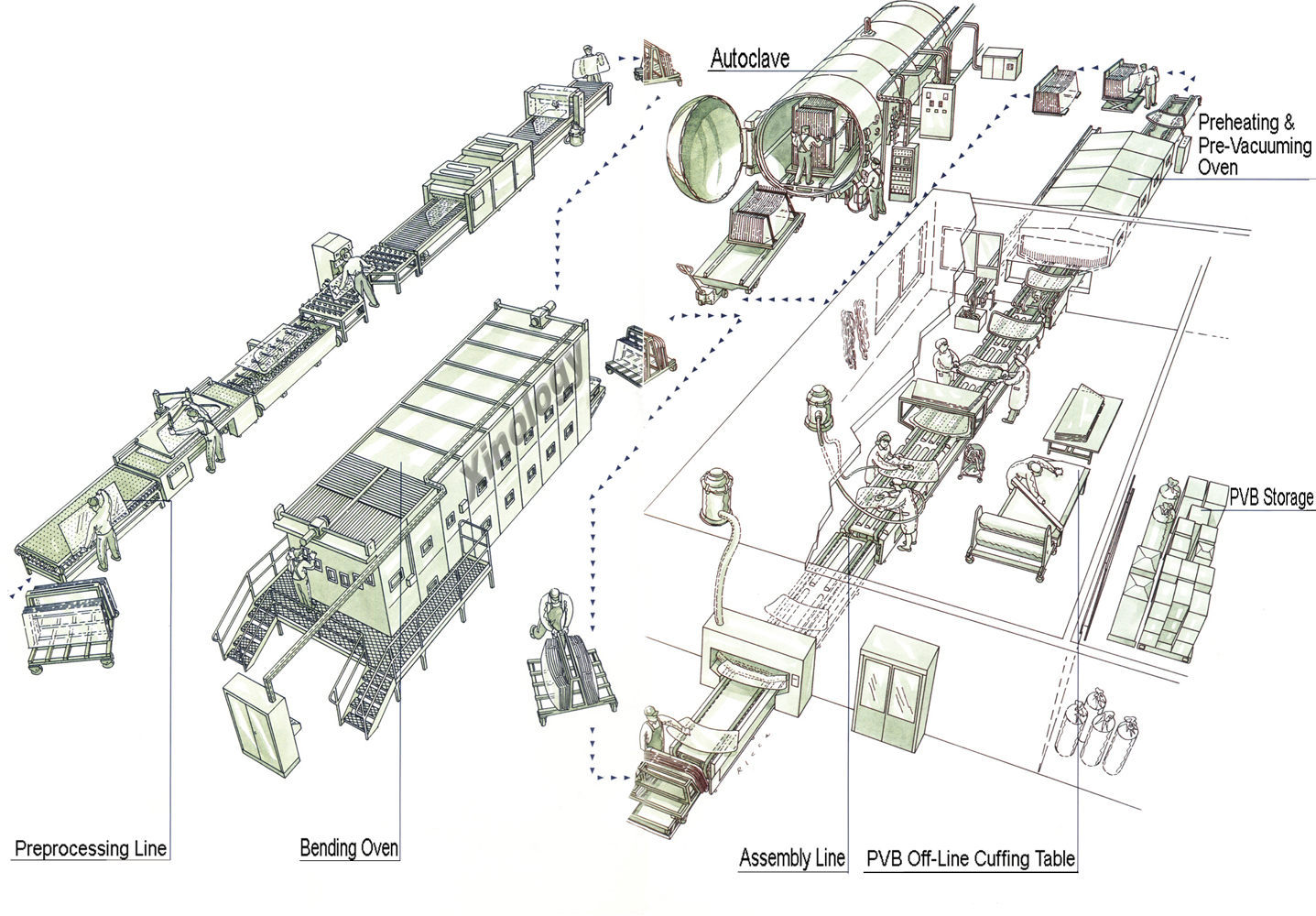
Integration with Lamination Lines
The autoclave integrates seamlessly with:
This ensures smooth production flow and eliminates handling-related risks.
Typical Applications
Wings Logic Autoclave Machines are essential for producing:

Business & ROI Perspective

While the autoclave is a capital-intensive system, its value is realized through: 

In laminated glass manufacturing, the autoclave is not optional—it is decisive.

Built for Certification, Safety & Long-Term Production

As global construction standards demand: 

Autoclave quality directly determines factory credibility. Wings Logic designs autoclaves that support certification-driven, future-ready laminated glass manufacturing.

Why Customers Trust Wings Logic Autoclaves

Wings Logic does not treat autoclaves as accessories — we engineer them as safety-critical infrastructure.

Heavy engineering pressure vessel design

Precise thermal and pressure control

Industrial-grade automation

Safety-first system architecture

Long-term reliability and service support

Discuss Your Autoclave Capacity & Specification Requirement