

Nature of Appliance Glass Manufacturing
Unlike architectural glass, appliance glass manufacturing is characterized by:
- Thin glass thickness (typically 2.8 mm to 6 mm)
- Small to medium panel sizes
- Very high daily volumes
- Tight dimensional tolerances
- Strict cosmetic quality requirements
- OEM-driven consistency standards
A single defect repeated across thousands of pieces becomes a major financial loss.
Therefore, appliance glass factories demand process discipline and engineering control at every step.
1.2 Market Drivers & Trends
Key global trends shaping appliance glass processing:
- Growth of smart and premium appliances
- Increasing use of printed and coated glass
- Demand for scratch-resistant and easy-clean surfaces
- Integration of touch controls and displays
- OEM pressure for cost reduction and stable supply
Wings Logic solutions are designed to meet OEM-grade production expectations.
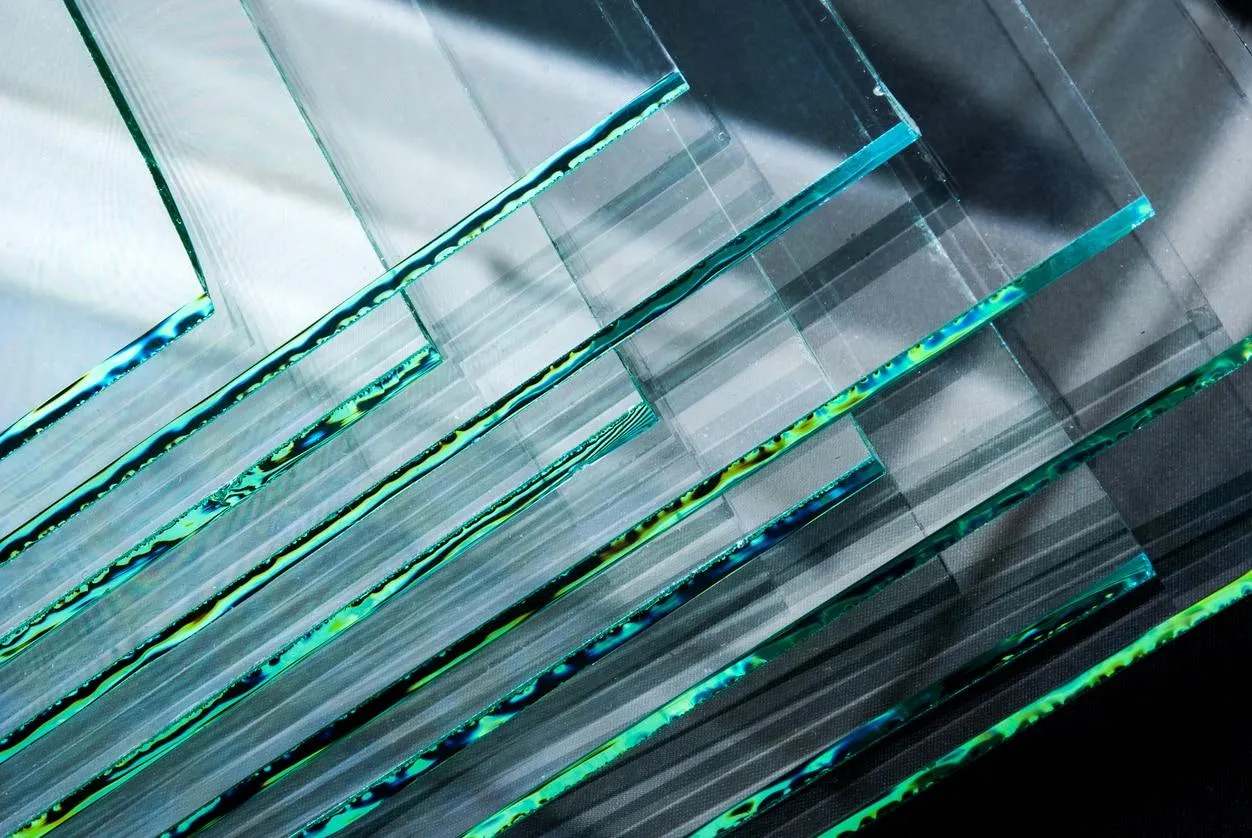
Appliance glass processing typically involves:
- Clear float glass
- Tinted glass (black, grey, bronze)
- Screen-printed ceramic glass
- UV printed decorative glass
- Tempered safety glass
- Heat-resistant glass (oven applications)
Each glass type must maintain:
- Optical clarity
- Consistent thickness
- Uniform stress profile
- Perfect edge finishing
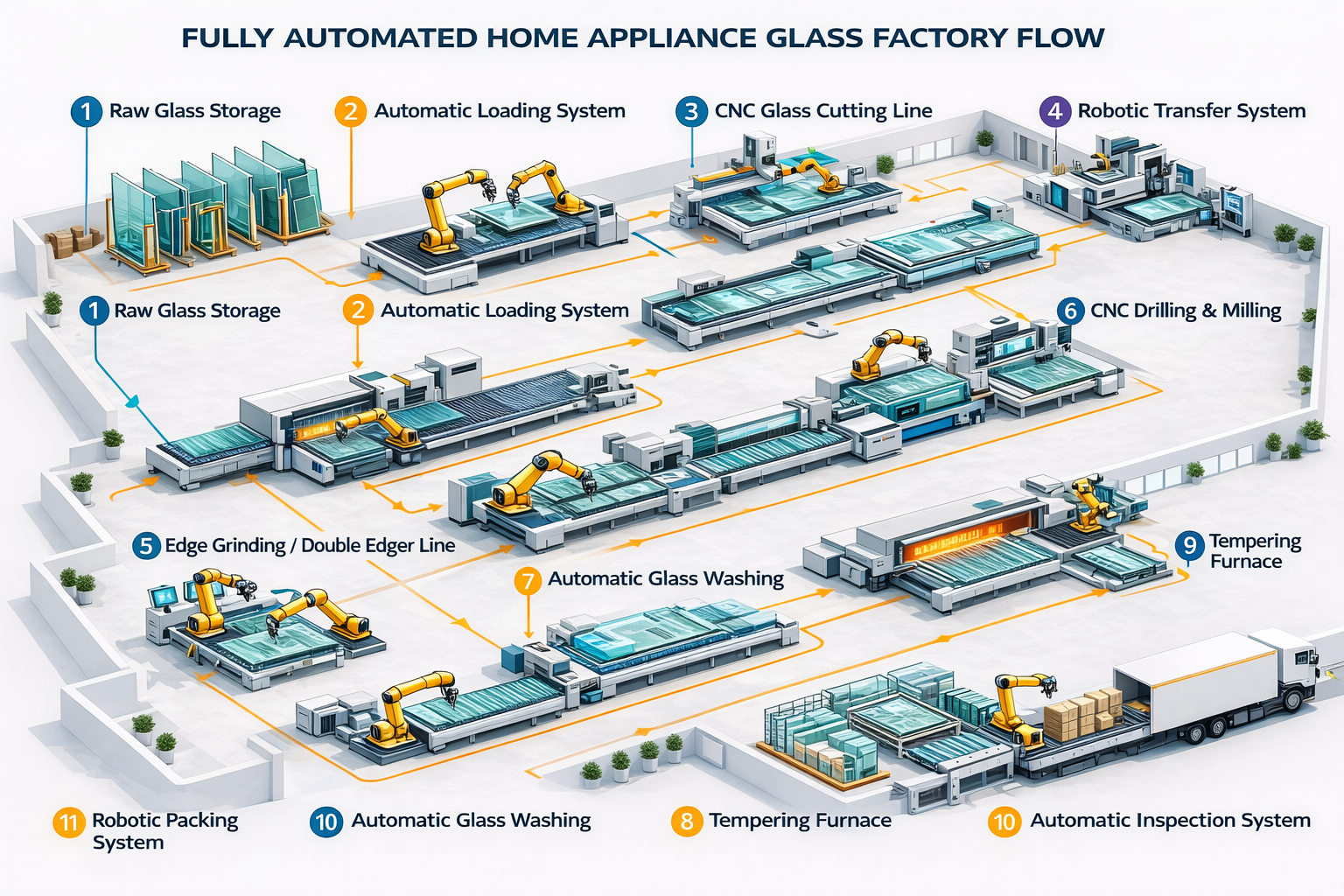
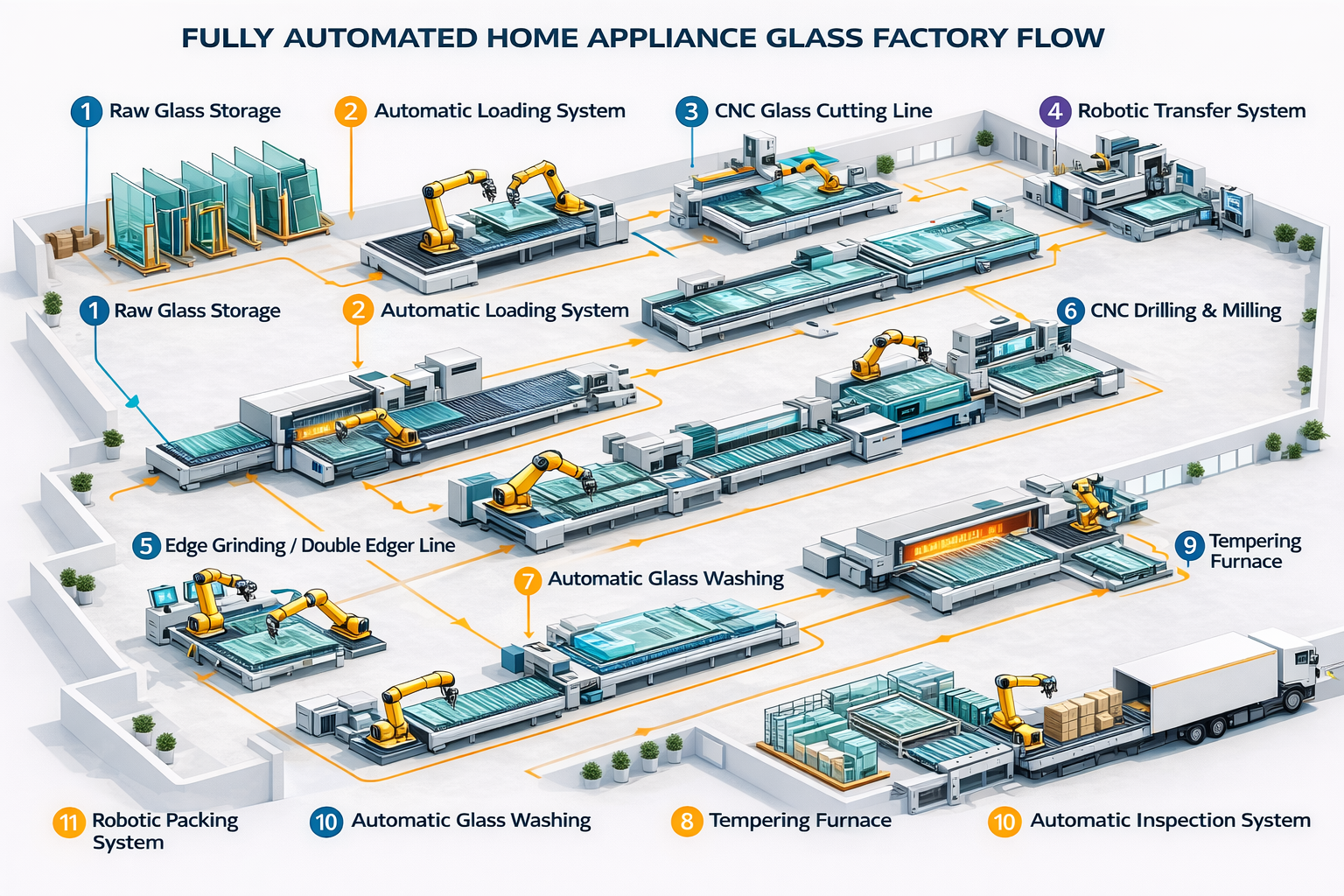
A professional appliance glass factory follows a highly standardized, repeatable process flow:
- Glass loading & storage
- CNC cutting & shape optimization
- Edge processing (high-speed)
- Washing & drying
- Printing (ceramic or UV)
- Tempering / heat strengthening
- Inspection & quality control
- Packing & dispatch
Wings Logic designs these lines to function like automotive-style production systems, not flexible job shops.
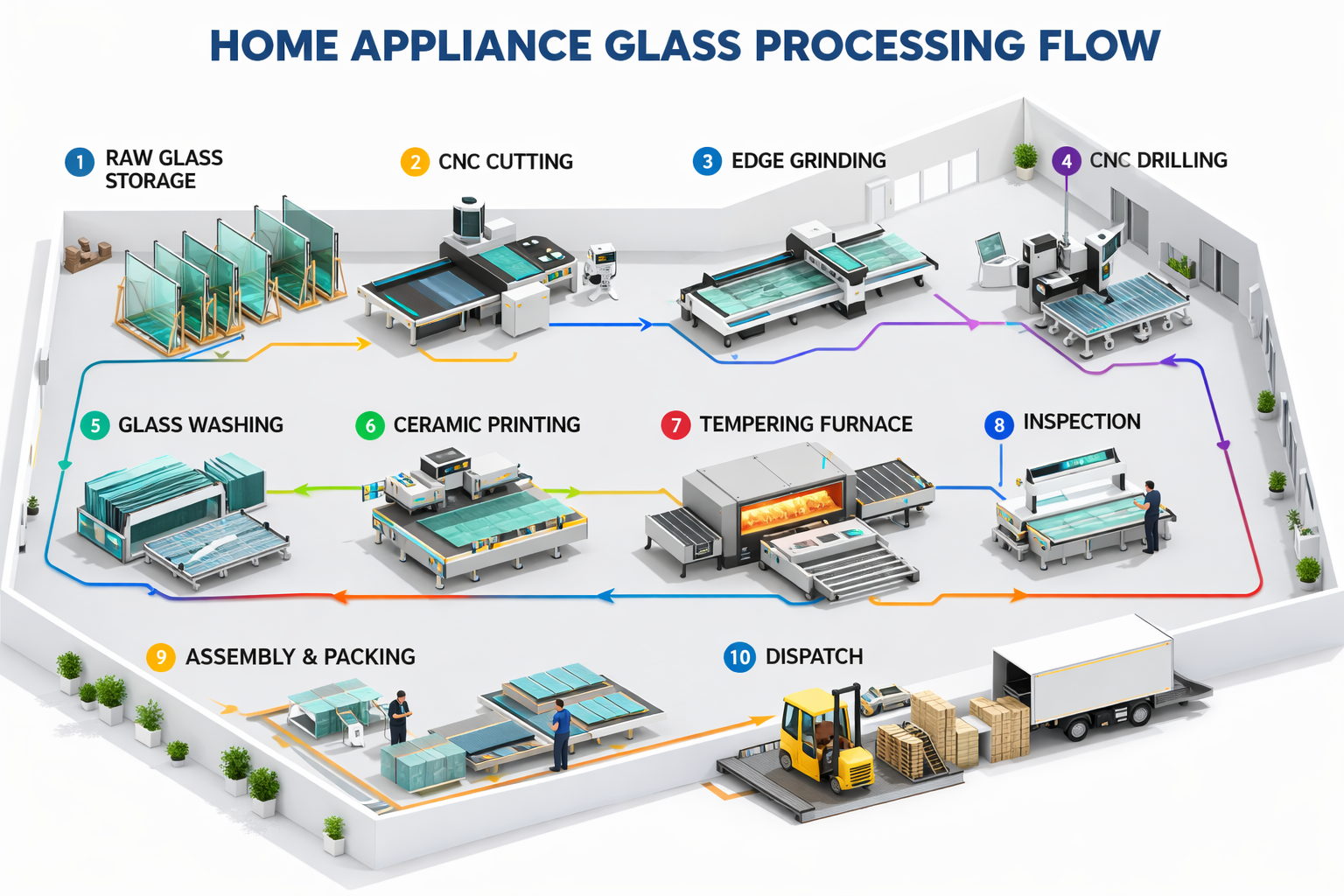
Target Customers
- Large appliance OEM suppliers
- Tier-1 glass component manufacturers
- Export-oriented factories
- High-volume contract manufacturers
4.2 Design Philosophy
- Maximum throughput
- Minimum human intervention
- Zero cosmetic defects
- Stable cycle time
4.3 Automatic Glass Storage & Feeding
System Features
- Automated glass sheet storage
- Controlled feeding to cutting line
- Damage-free handling
This ensures continuous supply to high-speed cutting lines.
4.4 CNC Glass Cutting Line (High-Speed Configuration)
Key Characteristics
- Optimized for thin glass
- Shape cutting for appliance panels
- High nesting efficiency
Technical Capabilities
- Cutting speed: up to 200 m/min
- DXF-based shape cutting
- Automatic labeling & traceability
Typical Output
- 5,000–8,000 pieces/day (depending on size)
This stage sets the foundation for dimensional accuracy.
4.5 Automatic Breaking, Sorting & Transfer
- Automated breaking tables
- Fast part separation
- Direct transfer to edging lines
Eliminates handling damage and improves cycle time.
4.6 High-Speed Edging & Seaming Lines
Recommended Machines
- Straight edging machines
- Seaming machines
- Corner grinding machines (optional)
Why Speed Matters
Appliance glass edges must be:
- Smooth
- Chip-free
- Consistent
Processing Speed
- 12–20 m/min (depending on thickness)
High-speed edging is critical for mass production stability.
4.7 Horizontal / Vertical Washing Machines
- Multi-brush washing
- Deionized water compatibility
- High-speed drying
Ensures print-ready and tempering-ready surfaces.
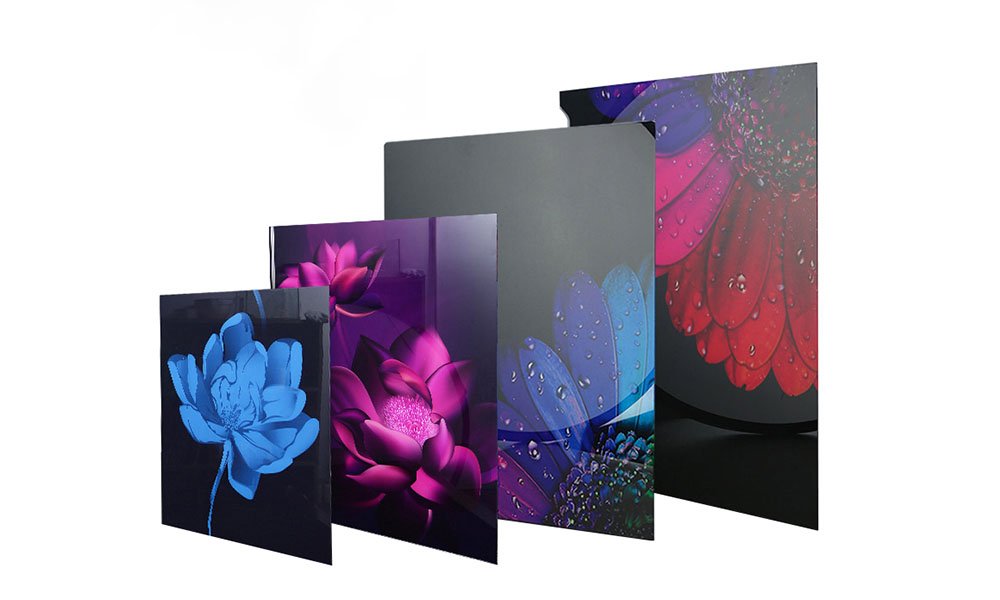
Ceramic Printing Line (OEM Standard)
Applications
- Oven door glass
- Cooktop panels
- Microwave fronts
Advantages
- Permanent print after tempering
- Heat and scratch resistance
- OEM approval compatibility
Ceramic printing is mandatory for high-temperature appliances.
5.2 UV Printing Line (Flexibility & Customization)
Applications
- Decorative panels
- Control icons
- Branding elements
Advantages
- Fast changeover
- Small batch capability
- Full-color designs
UV printing complements ceramic printing in flexible product lines.
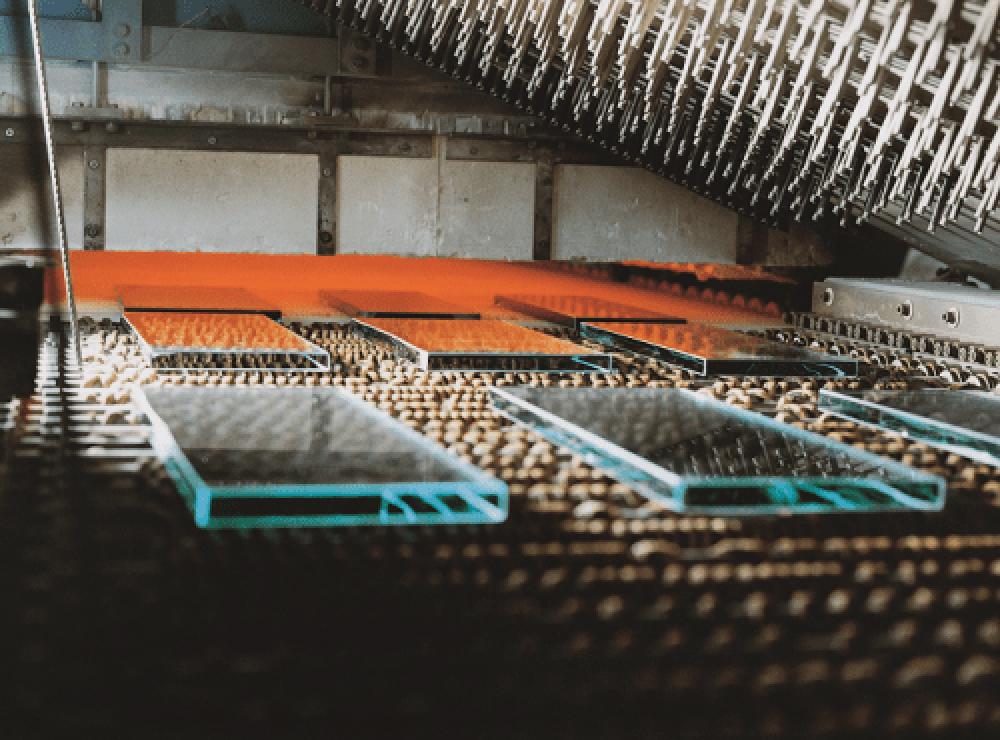
Furnace Selection
Depending on output and glass type:
- Flat convection furnace
- Continuous tempering furnace
Why Convection Is Preferred
- Uniform heating of thin glass
- Reduced breakage
- Stable stress profile
6.2 Typical Furnace Output
- 3,000–6,000 pieces/day
- Thickness range: 3–6 mm
Consistency is more important than extreme size capability.
Target Customers
- Medium-scale appliance suppliers
- Domestic OEM vendors
- New manufacturing entrants
7.2 Typical Configuration
- Manual/semi-automatic glass loading
- CNC cutting table
- Standalone edging machines
- Washing machine
- Flat convection furnace
- Manual inspection & packing
7.3 Production Capacity
- 1,500–3,000 pieces/day
- Suitable for regional supply
Wings Logic ensures these lines are automation-upgradable.
Nature of Appliance Glass Manufacturing
Unlike architectural glass, appliance glass manufacturing is characterized by:
- Thin glass thickness (typically 2.8 mm to 6 mm)
- Small to medium panel sizes
- Very high daily volumes
- Tight dimensional tolerances
- Strict cosmetic quality requirements
- OEM-driven consistency standards
A single defect repeated across thousands of pieces becomes a major financial loss.
Therefore, appliance glass factories demand process discipline and engineering control at every step.
1.2 Market Drivers & Trends
Key global trends shaping appliance glass processing:
- Growth of smart and premium appliances
- Increasing use of printed and coated glass
- Demand for scratch-resistant and easy-clean surfaces
- Integration of touch controls and displays
- OEM pressure for cost reduction and stable supply
Wings Logic solutions are designed to meet OEM-grade production expectations.
Appliance glass processing typically involves:
- Clear float glass
- Tinted glass (black, grey, bronze)
- Screen-printed ceramic glass
- UV printed decorative glass
- Tempered safety glass
- Heat-resistant glass (oven applications)
Each glass type must maintain:
- Optical clarity
- Consistent thickness
- Uniform stress profile
- Perfect edge finishing
A professional appliance glass factory follows a highly standardized, repeatable process flow:
- Glass loading & storage
- CNC cutting & shape optimization
- Edge processing (high-speed)
- Washing & drying
- Printing (ceramic or UV)
- Tempering / heat strengthening
- Inspection & quality control
- Packing & dispatch
Wings Logic designs these lines to function like automotive-style production systems, not flexible job shops.
Target Customers
- Large appliance OEM suppliers
- Tier-1 glass component manufacturers
- Export-oriented factories
- High-volume contract manufacturers
4.2 Design Philosophy
- Maximum throughput
- Minimum human intervention
- Zero cosmetic defects
- Stable cycle time
4.3 Automatic Glass Storage & Feeding
System Features
- Automated glass sheet storage
- Controlled feeding to cutting line
- Damage-free handling
This ensures continuous supply to high-speed cutting lines.
4.4 CNC Glass Cutting Line (High-Speed Configuration)
Key Characteristics
- Optimized for thin glass
- Shape cutting for appliance panels
- High nesting efficiency
Technical Capabilities
- Cutting speed: up to 200 m/min
- DXF-based shape cutting
- Automatic labeling & traceability
Typical Output
- 5,000–8,000 pieces/day (depending on size)
This stage sets the foundation for dimensional accuracy.
4.5 Automatic Breaking, Sorting & Transfer
- Automated breaking tables
- Fast part separation
- Direct transfer to edging lines
Eliminates handling damage and improves cycle time.
4.6 High-Speed Edging & Seaming Lines
Recommended Machines
- Straight edging machines
- Seaming machines
- Corner grinding machines (optional)
Why Speed Matters
Appliance glass edges must be:
- Smooth
- Chip-free
- Consistent
Processing Speed
- 12–20 m/min (depending on thickness)
High-speed edging is critical for mass production stability.
4.7 Horizontal / Vertical Washing Machines
- Multi-brush washing
- Deionized water compatibility
- High-speed drying
Ensures print-ready and tempering-ready surfaces.
Ceramic Printing Line (OEM Standard)
Applications
- Oven door glass
- Cooktop panels
- Microwave fronts
Advantages
- Permanent print after tempering
- Heat and scratch resistance
- OEM approval compatibility
Ceramic printing is mandatory for high-temperature appliances.
5.2 UV Printing Line (Flexibility & Customization)
Applications
- Decorative panels
- Control icons
- Branding elements
Advantages
- Fast changeover
- Small batch capability
- Full-color designs
UV printing complements ceramic printing in flexible product lines.
Furnace Selection
Depending on output and glass type:
- Flat convection furnace
- Continuous tempering furnace
Why Convection Is Preferred
- Uniform heating of thin glass
- Reduced breakage
- Stable stress profile
6.2 Typical Furnace Output
- 3,000–6,000 pieces/day
- Thickness range: 3–6 mm
Consistency is more important than extreme size capability.
Target Customers
- Medium-scale appliance suppliers
- Domestic OEM vendors
- New manufacturing entrants
7.2 Typical Configuration
- Manual/semi-automatic glass loading
- CNC cutting table
- Standalone edging machines
- Washing machine
- Flat convection furnace
- Manual inspection & packing
7.3 Production Capacity
- 1,500–3,000 pieces/day
- Suitable for regional supply
Wings Logic ensures these lines are automation-upgradable.