
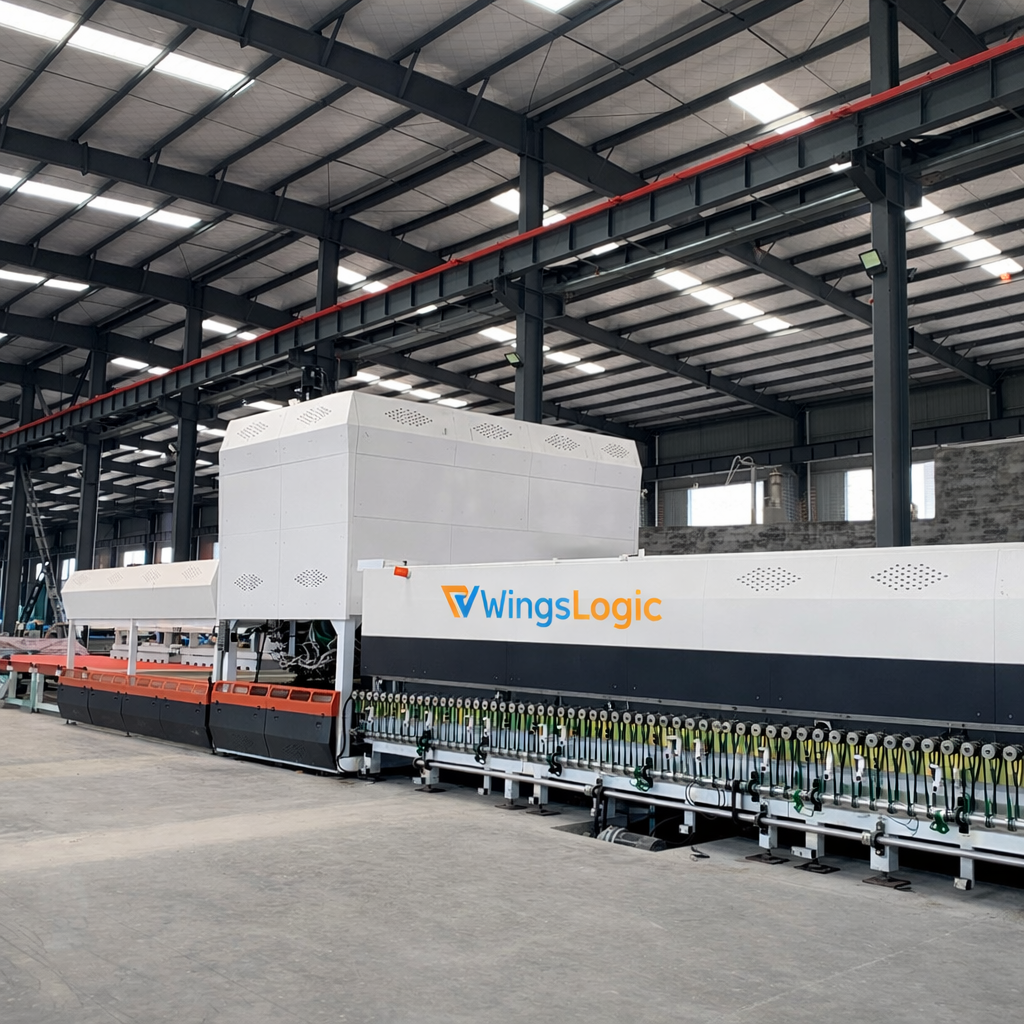
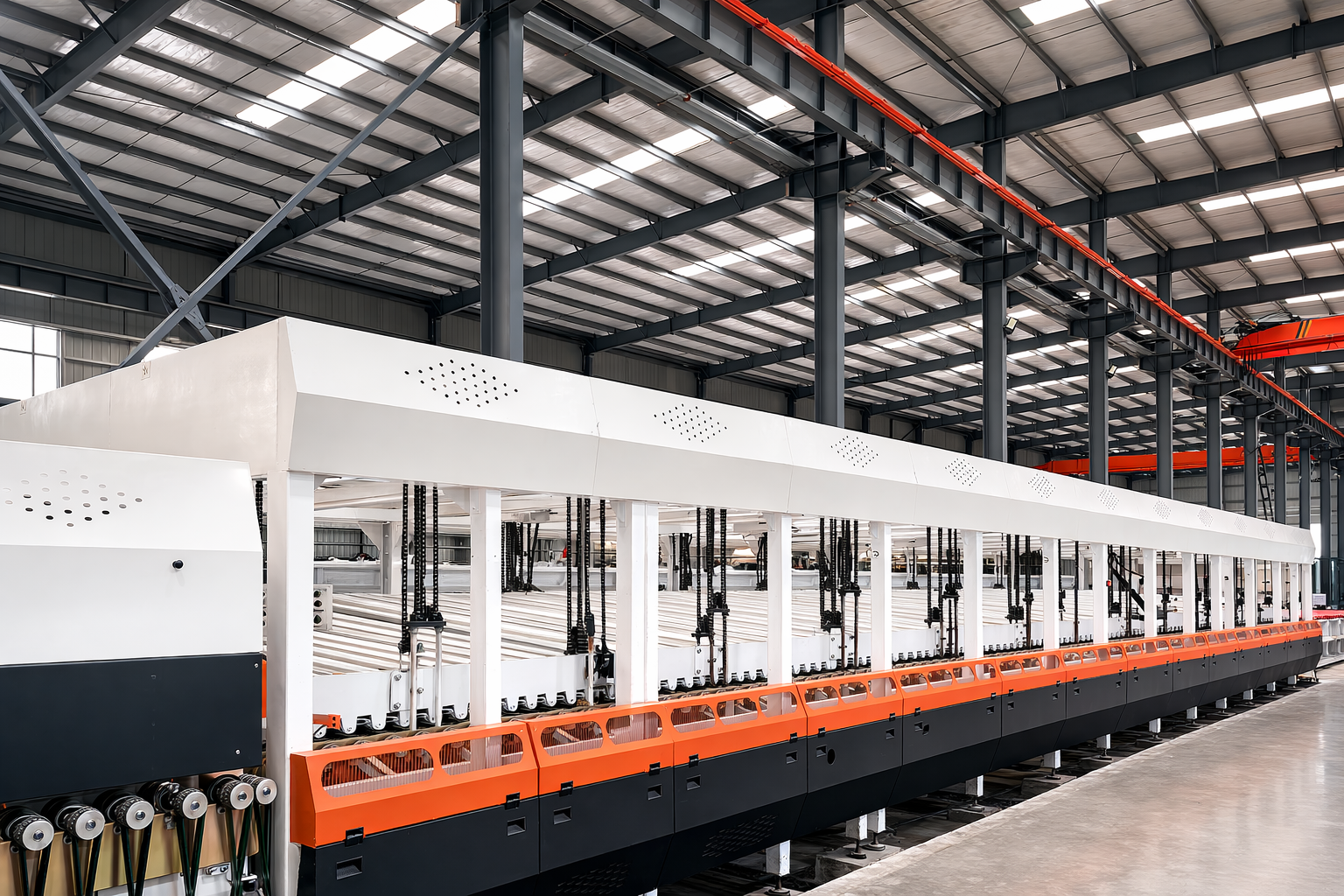
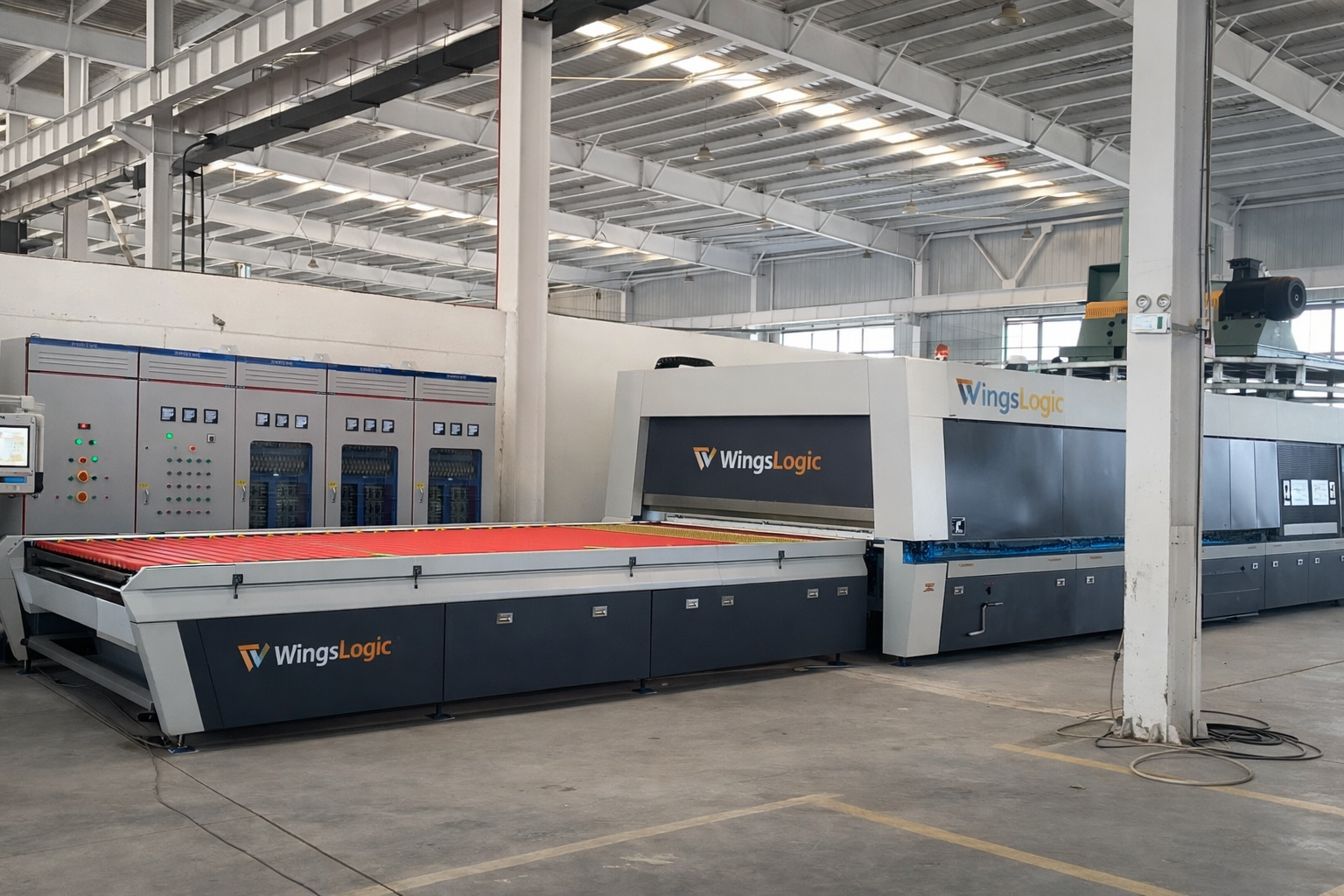

High-Rigidity Furnace Frame
The furnace body is constructed using heavy-duty structural steel, designed to maintain dimensional stability under continuous high-temperature operation.
Key structural objectives:
- Resistance to long-term thermal expansion
- Mechanical stability for roller alignment
- Protection against vibration and deformation
Structural rigidity directly influences glass flatness and optical quality.
Optimized Internal Chamber Geometry
The internal chamber layout is carefully designed to:
- Ensure uniform radiation exposure
- Minimize thermal shadow zones
- Maintain consistent heat distribution from edge to center
This geometry is validated through thermal profiling and production testing, not guesswork.
Heating Element Technology & Layout
High-Quality Electric Heating Elements
Wings Logic radiation furnaces use industrial-grade heating elements designed for:- High temperature stability
- Long service life
- Consistent radiant output
- Local overheating
- Temperature gradients
- Uneven glass softening
Multi-Zone Heating Architecture
The furnace is divided into multiple independent heating zones, each controlled separately. This enables:- Edge and center temperature balancing
- Fine tuning for different glass sizes
- Compensation for heat loss at boundaries
Radiant Heat Transfer Control
Controlled Infrared Exposure
Radiant heat penetrates glass from the surface inward. Wings Logic furnaces control:- Radiation intensity
- Exposure duration
- Zone-to-zone balance
- Uniform glass temperature
- Controlled softening
- Stable stress formation during quenching
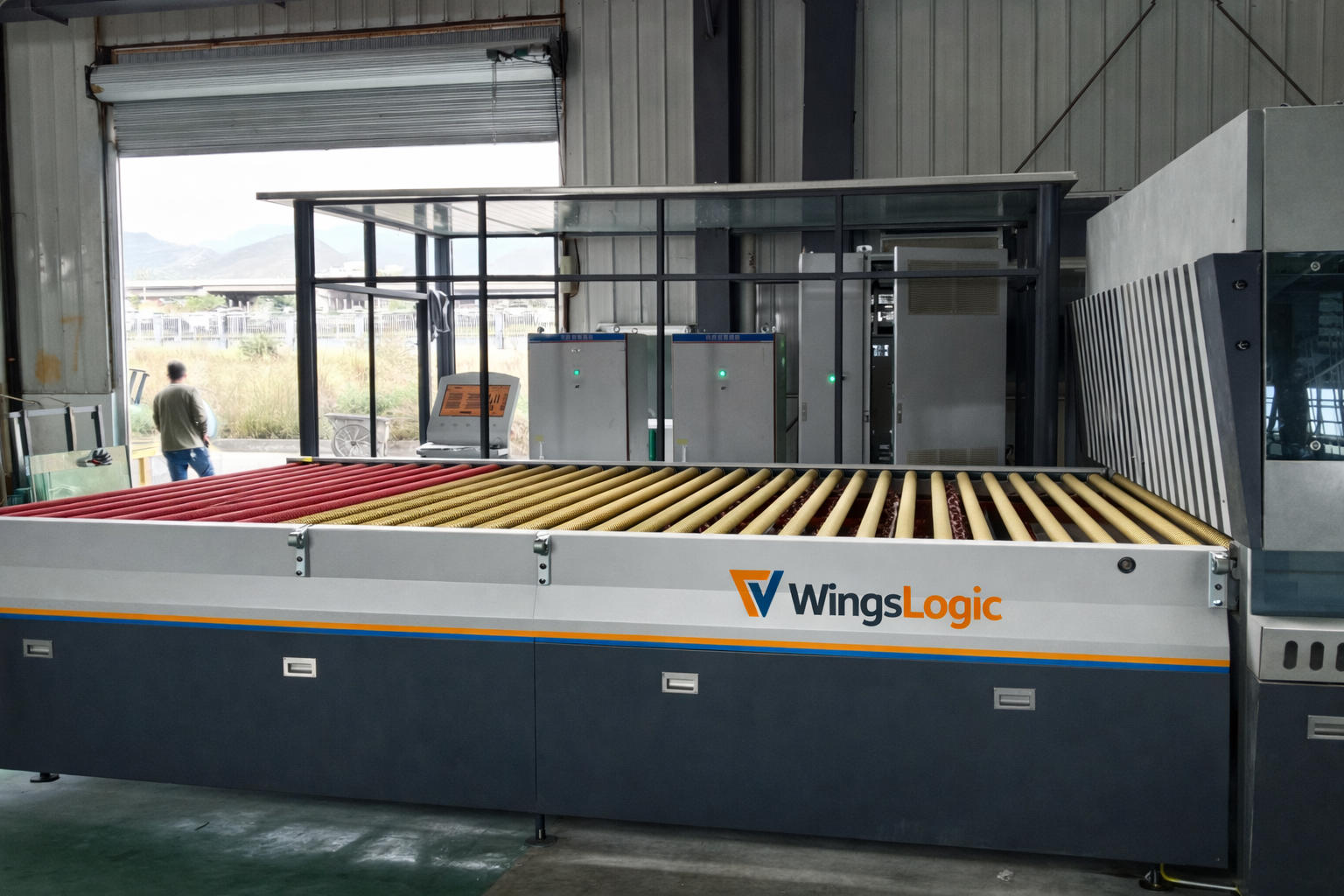
Ceramic Roller Transport System
Precision Ceramic Rollers
Glass moves through the furnace on high-temperature ceramic rollers, engineered for:- Dimensional stability
- Smooth rotation
- Minimal thermal distortion
- Roller wave
- Surface distortion
- Edge stress consistency
Conveyor Speed & Process Stability
Roller speed is synchronized with:- Heating time requirements
- Glass thickness
- Furnace load conditions
Quenching System – Converting Heat into Strength
Rapid Controlled Cooling
Once heated, glass enters the quench section, where high-pressure air jets rapidly cool the surfaces. This creates:- Surface compression
- Internal tensile stress
- Increased mechanical strength
Balanced Quench Air Engineering
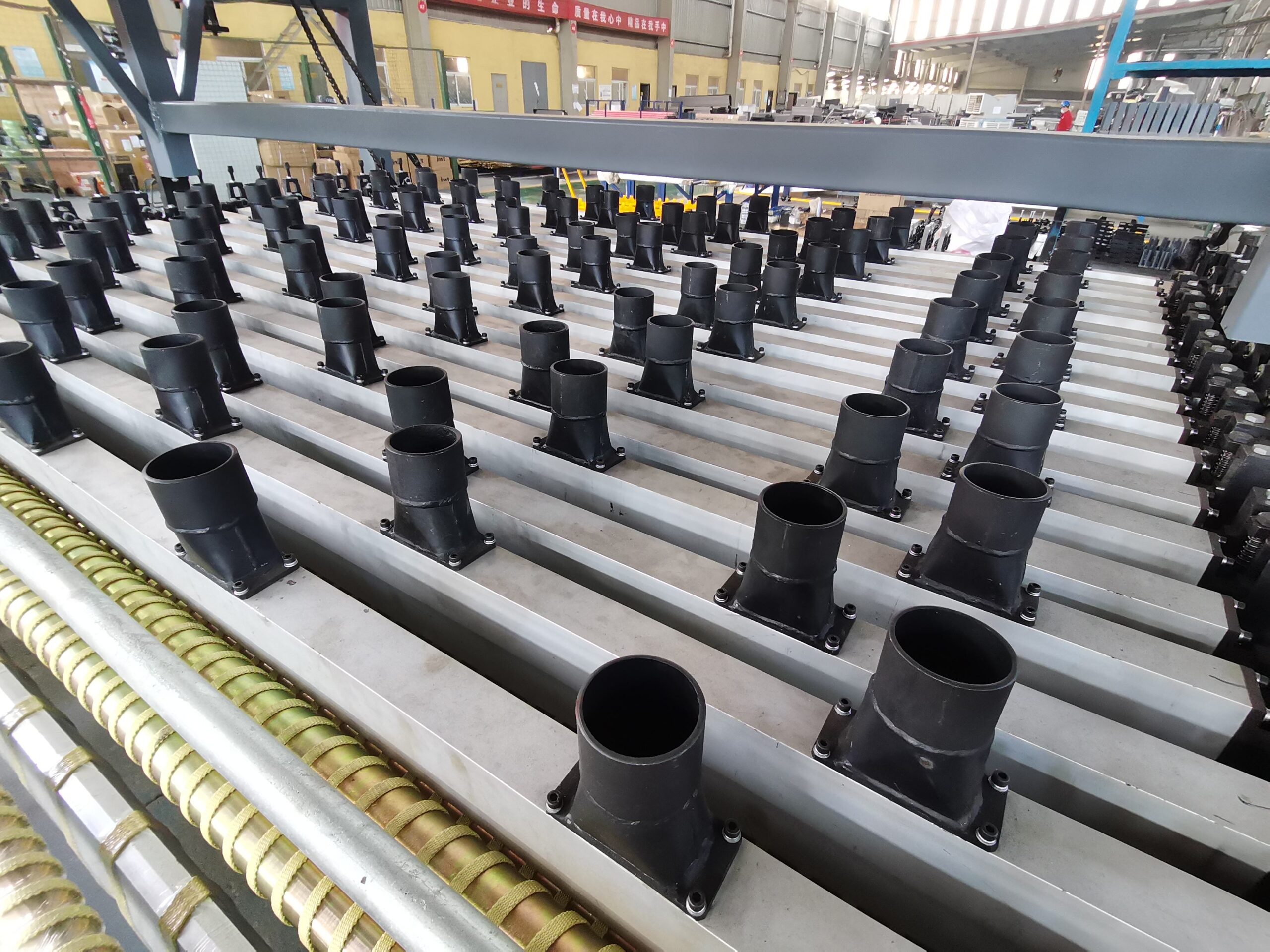
Wings Logic quench systems feature:- Top & bottom independent pressure control
- Uniform nozzle distribution
- Adjustable air flow parameters
- Stress depth
- Fragmentation pattern
- Optical quality
Optical Quality & Flatness Control
Radiation furnaces are known for their ability to produce excellent flatness when properly designed.
Wings Logic flat radiation furnaces minimize:
- Roller wave
- Surface distortion
- Visual anisotropy
- Edge deformation
This makes them especially suitable for:
- Furniture glass
- Interior glass
- Flat architectural applications
- Standard safety glazing
Intelligent Control Software
Recipe-Based Heating Logic
The furnace control system supports:- Predefined heating recipes
- Thickness-based parameter selection
- Zone temperature coordination
- Repeatable results
- Reduced operator dependency
- Faster changeover between products
Real-Time Monitoring & Protection
Sensors continuously monitor:- Zone temperatures
- Roller movement
- System stability
- Overheating
- Element damage
- Process instability
Energy Efficiency & Operational Economy
Flat radiation furnaces offer excellent energy efficiency when engineered correctly.
Wings Logic optimizes energy usage through:
- High-efficiency insulation
- Stable heating cycles
- Reduced mechanical complexity
Lower energy consumption results in:
- Reduced operating costs
- Lower maintenance expenses
- Long-term ROI stability