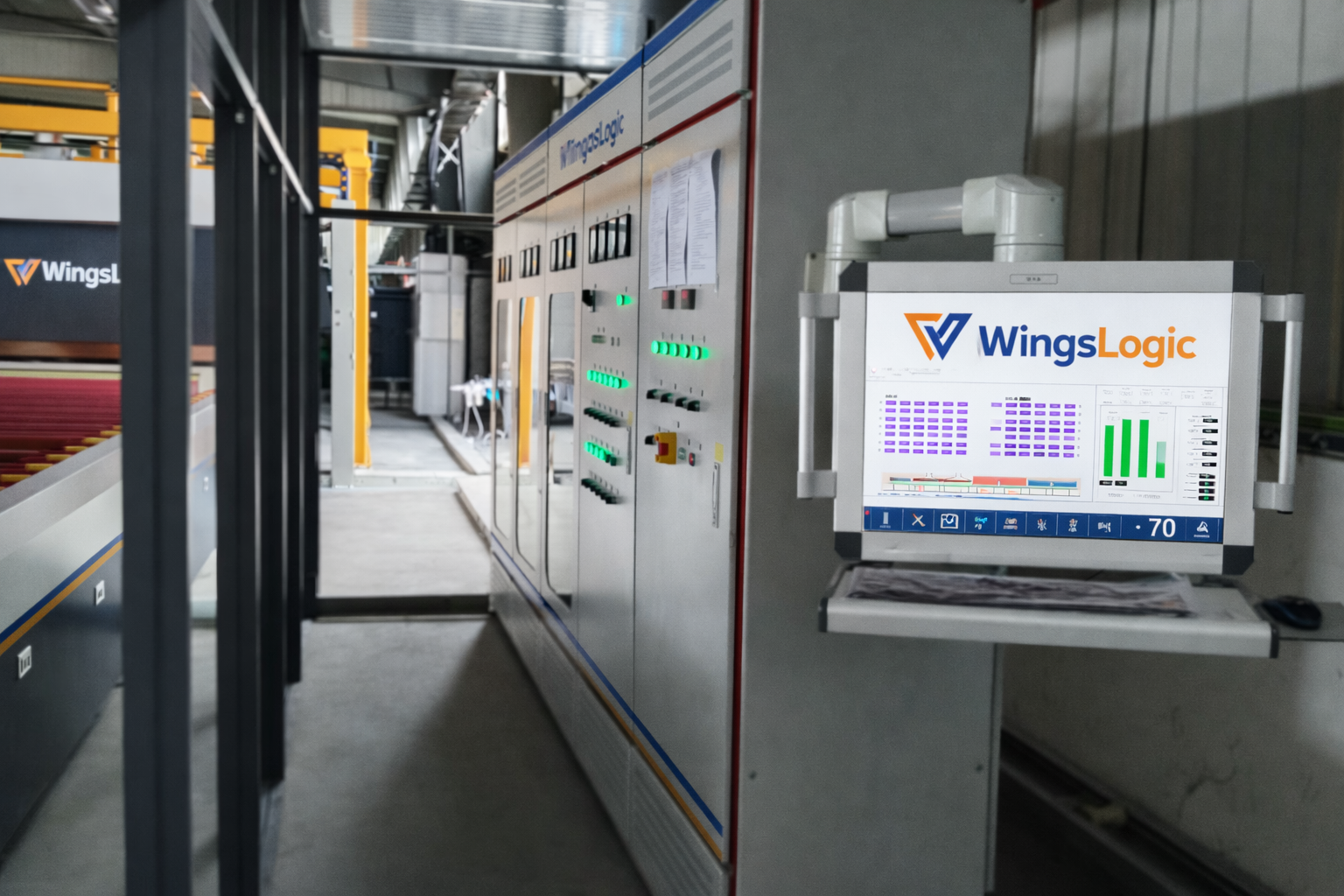
Flat Convection Furnace

Advanced Tempering Technology Engineered Through Thermal Science & Industrial R&D

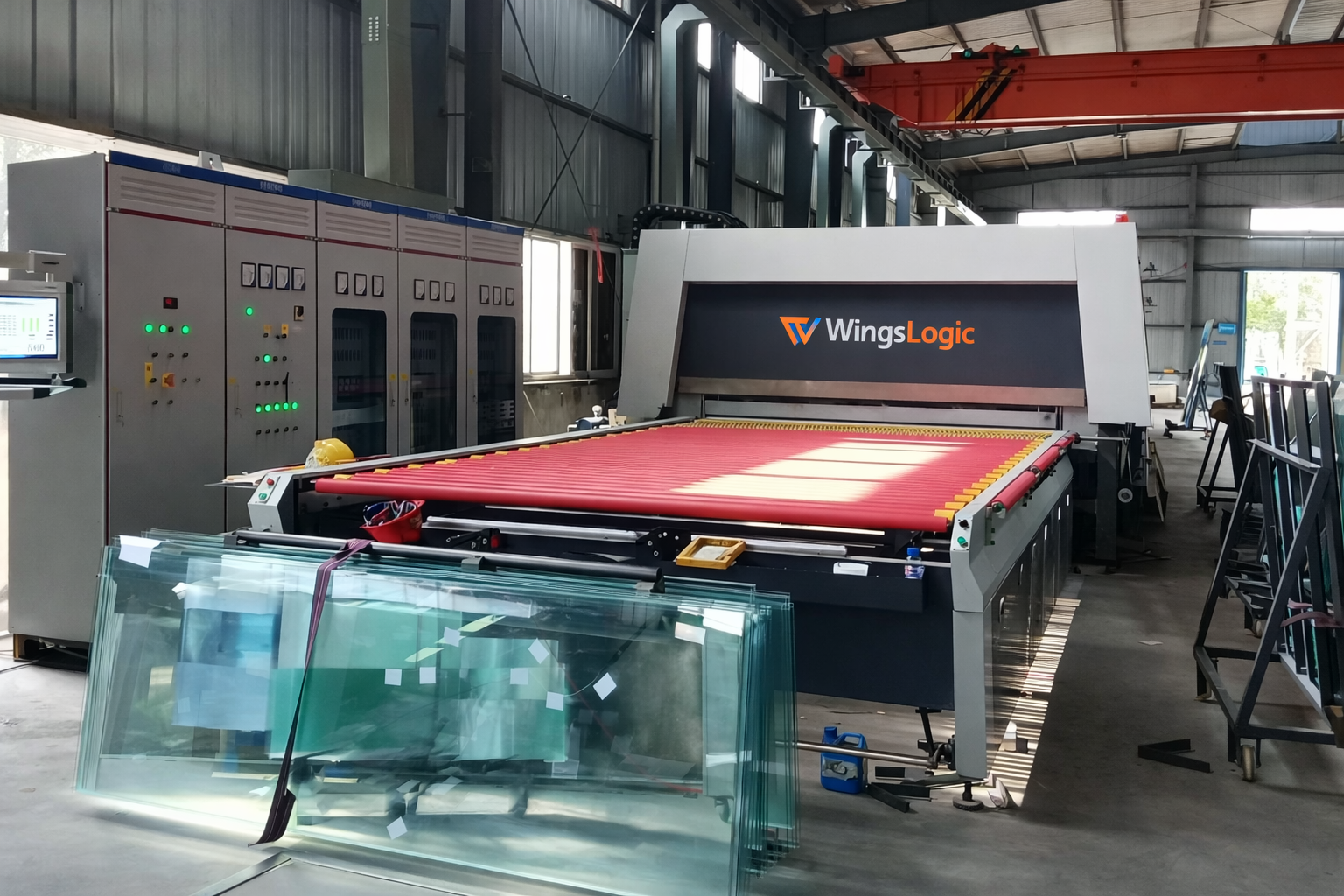
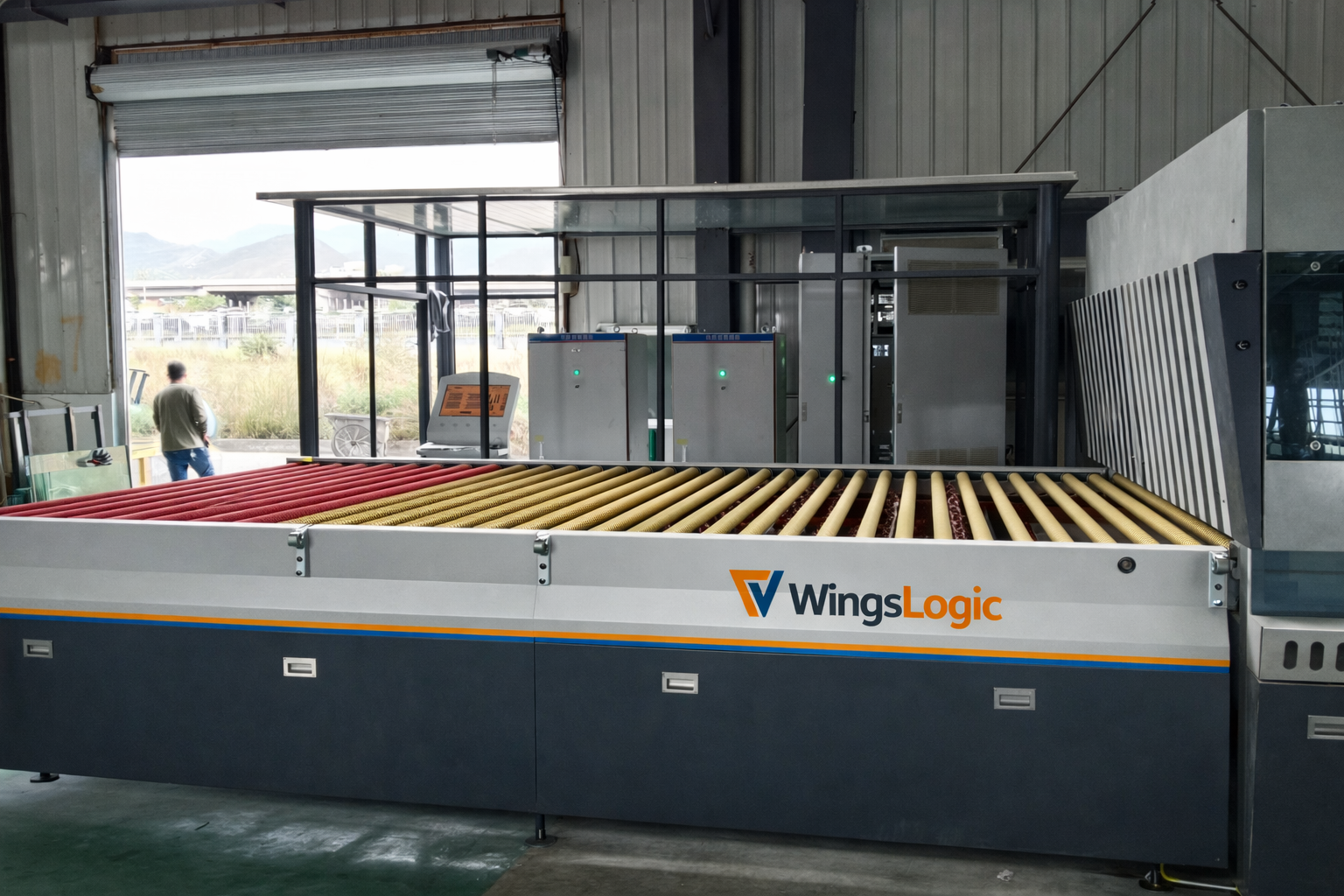
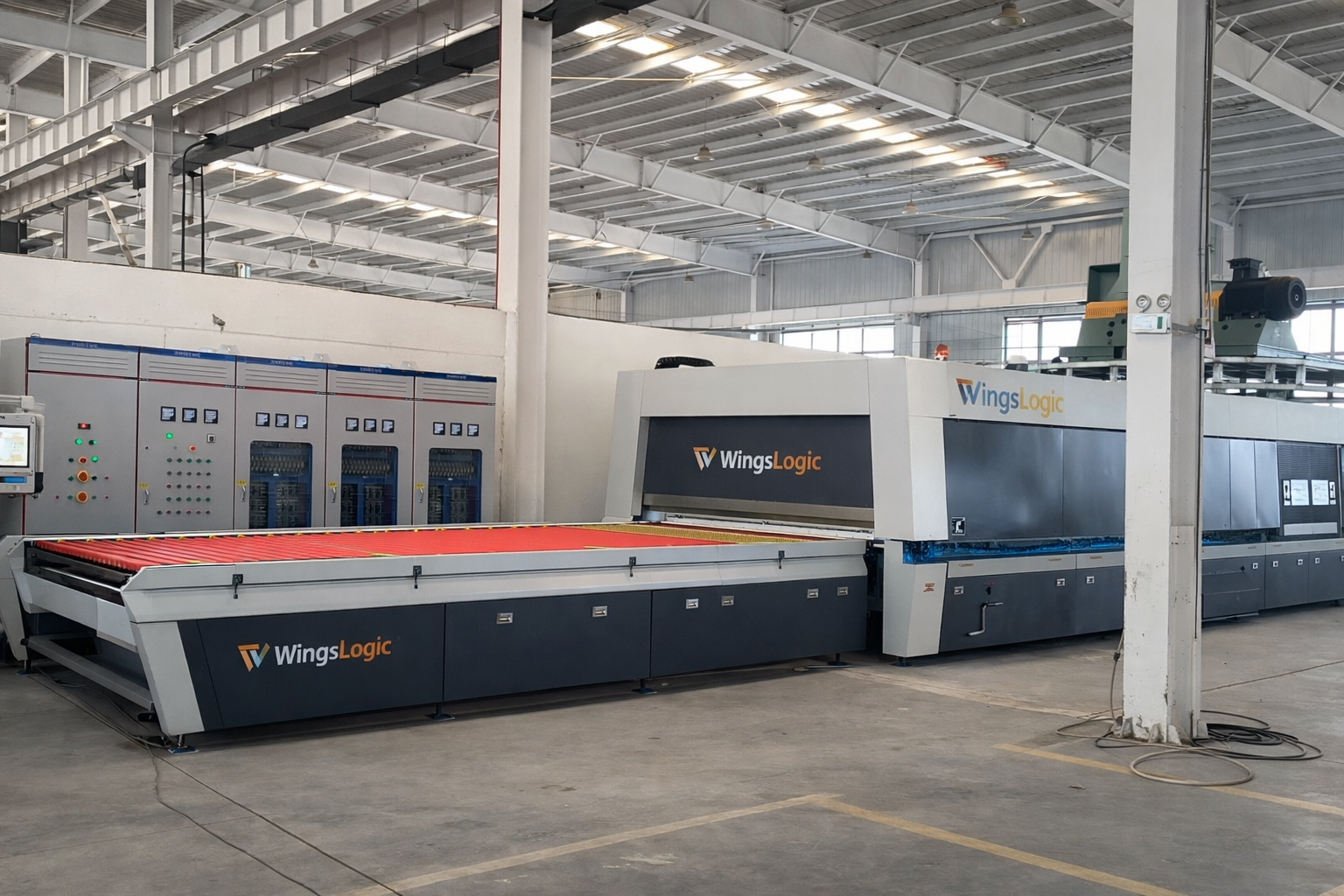
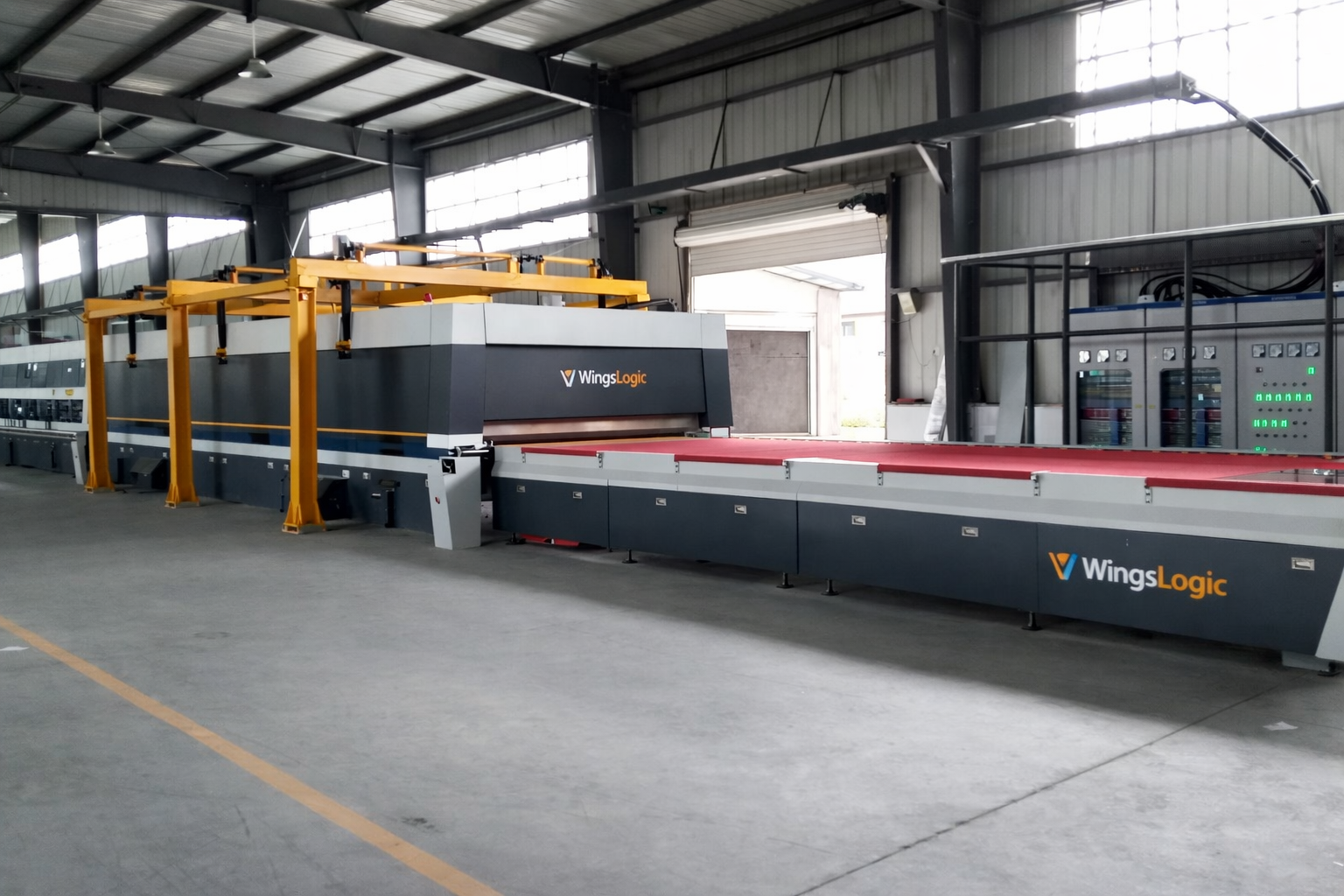
The Flat Convection Furnace is the most widely used and technically refined glass tempering solution in modern glass processing plants. At Wings Logic, our flat convection furnaces are not designed as standard machines — they are the result of deep thermal research, airflow simulation, material science, and real-world production feedback.
Every furnace we engineer is built to solve the most critical challenges in glass tempering:
  • Uniform heat transfer
  • Stable stress distribution
  • Low optical distortion
  • Consistent performance across Low-E and coated glass
  • Long-term operational reliability
This is where engineering discipline meets production reality.

Understanding Flat Convection Tempering Technology

Glass tempering is fundamentally a controlled thermal transformation process. The objective is to heat glass uniformly to its softening point and then cool it rapidly to induce surface compression and internal tension, giving tempered glass its characteristic strength and safety properties. In convection furnaces, forced hot air circulation is used to actively transfer heat into the glass surface, rather than relying only on radiant heat. This method offers decisive advantages:
Wings Logic flat convection furnaces are engineered to control this thermal behavior at a microscopic level.

Core Engineering Philosophy at Wings Logic

Our furnace development is driven by four non-negotiable engineering principles:
Every mechanical, thermal, and software component is designed to support these principles under continuous industrial operation.

Furnace Chamber & Structural Design

The furnace chamber is constructed using high-grade structural steel, reinforced to maintain geometry under long-term thermal cycling. Key structural considerations include:
  • Resistance to thermal expansion
  • Mechanical rigidity at high temperatures
  • Long service life under continuous operation
The internal chamber geometry is optimized to support stable airflow patterns and uniform heat exposure.
Advanced Thermal Insulation System
Wings Logic furnaces use multi-layer high-temperature insulation materials, minimizing heat loss and improving energy efficiency. This insulation system:
  • Maintains stable internal temperature
  • Reduces power consumption
  • Protects structural components
  • Improves long-term furnace reliability
Thermal stability is the foundation of consistent glass quality.
Forced Hot Air Circulation Technology
The defining feature of a flat convection furnace is its active air circulation system. Wings Logic furnaces use:
  • High-efficiency convection blowers
  • Precision-engineered air ducts
  • Optimized nozzle arrays
Hot air is delivered uniformly to the glass surface from both top and bottom, ensuring balanced heat transfer.
Air Nozzle & Flow Dynamics Design
Air nozzle design is a critical area of Wings Logic R&D. Our engineering team focuses on:
  • Nozzle spacing and density
  • Air velocity control
  • Turbulence optimization
  • Uniform heat penetration
This ensures:
  • No cold spots
  • No overheating zones
  • Consistent heating across glass width and length
These parameters are refined through thermal modeling and factory testing, not assumptions.
High-Precision Heating Zones
The furnace is divided into multiple independent heating zones, each controlled separately. This allows:
  • Fine temperature adjustment across the glass
  • Compensation for edge and center heat differences
  • Optimized heating curves for different glass thicknesses
Each zone operates under closed-loop PID control, ensuring real-time correction of temperature deviations.
Adaptive Heating Logic for Low-E Glass
Low-E and coated glass reflect radiant heat, making traditional furnaces inefficient. Convection heating solves this problem by:
  • Actively forcing heat into the glass surface
  • Reducing dependence on radiation absorption
  • Ensuring uniform heating despite coatings
Wings Logic furnaces are engineered specifically to handle soft coat and hard coat Low-E glass with stable results.

High-Quality Roller Design
Glass is transported through the furnace on high-temperature ceramic rollers, engineered for:
  • Minimal thermal deformation
  • Smooth rotation
  • Long operational life
Roller straightness and alignment are critical to prevent:
  • Roller wave distortion
  • Optical defects
  • Edge stress variation
Wings Logic places extreme emphasis on roller precision and bearing quality.
Speed Synchronization & Stability
Roller speed is synchronized precisely with:
  • Heating time requirements
  • Glass thickness
  • Furnace load conditions
This ensures stable glass movement and uniform exposure to heat.
Controlled Rapid Cooling
After heating, glass enters the quench section, where high-pressure air jets rapidly cool the surfaces. This induces:
  • Surface compression
  • Internal tensile stress
  • Strength enhancement
The challenge is not cooling fast — it is cooling evenly.
Advanced Quench Air Distribution
Wings Logic quench systems feature:
  • Top and bottom independent pressure control
  • Uniform nozzle layout
  • Adjustable air flow intensity
This allows precise control over:
  • Stress profile
  • Fragmentation pattern
  • Optical quality
The result is strong, safe, and visually clean tempered glass.

Optical distortion is one of the biggest concerns in tempered glass, especially for façade and architectural applications.

Wings Logic flat convection furnaces are designed to minimize:

  • Roller wave
  • Anisotropy
  • Edge distortion
  • Visual haze

This is achieved through:

  • Uniform heating
  • Stable glass transport
  • Balanced quench pressure
  • Optimized air flow geometry

The outcome is architectural-grade optical quality.

Recipe-Based Production Control
Each glass type can be processed using stored thermal recipes, defining:
  • Heating temperature
  • Zone balance
  • Conveyor speed
  • Quench pressure profile
This ensures:
  • Repeatable results
  • Faster setup
  • Reduced operator dependency
Real-Time Monitoring & Feedback
Sensors continuously monitor:
  • Furnace temperature
  • Air pressure
  • Glass movement
  • System status
The control system adjusts parameters dynamically, maintaining process stability even during long production runs.
Energy Efficiency & Sustainability
Wings Logic furnaces are engineered to optimize energy usage through:
Lower energy consumption directly translates into:
Performance Under Industrial Conditions
Our flat convection furnaces are designed for:
Every component is selected for industrial reliability, not laboratory conditions.
Service, Support & Long-Term Partnership
Technology alone does not ensure success. Wings Logic backs every furnace with:
Our service teams are trained not just to repair, but to optimize tempering performance.

Built for Today’s and Tomorrow’s Glass Industry

As glass applications demand: 

Flat convection furnaces must evolve continuously. Wings Logic invests in ongoing research, field feedback, and thermal innovation, ensuring our furnaces remain future-ready.

Why Customers Trust Wings Logic Flat Convection Furnaces

Wings Logic does not sell furnaces as equipment. We deliver tempering technology as a system.

Deep thermal engineering expertise

Strong R&D-driven design philosophy

Proven Low-E performance

Consistent optical and stress quality

Reliable service and lifecycle support

Discuss Your Automatic Sandblasting Requirement